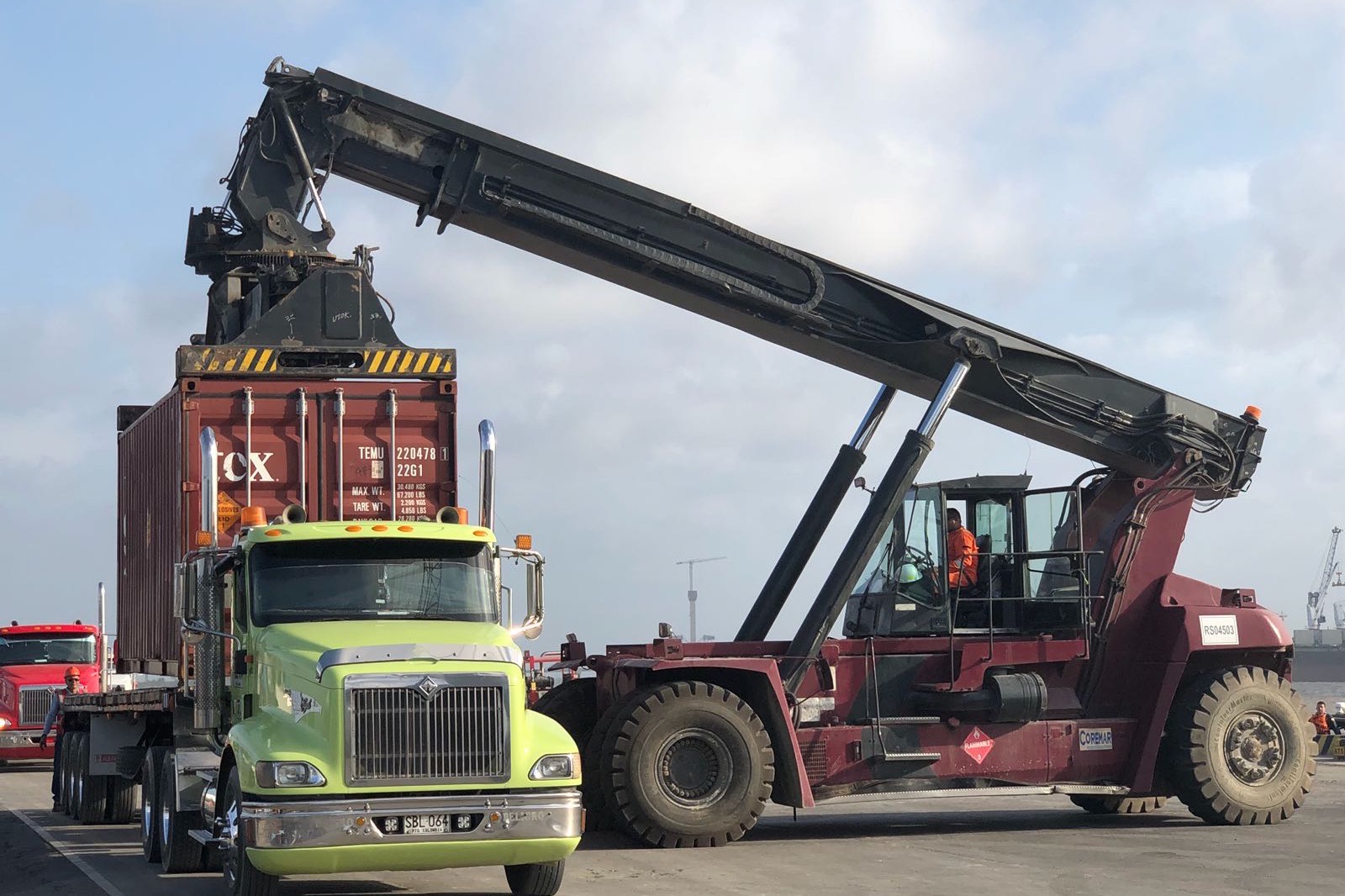
The challenge
Class 1 explosive ordnance at this quantity narrows the options at every step. Carrier acceptance, route approval, segregation, and escort all have to line up simultaneously, and any one of them failing stops the whole movement.
The destination added a second layer. Delivering to a Colombian Air Force combat command meant coordinating with a foreign military end user, clearing Colombian customs for controlled ordnance, and moving through an operating environment where the security plan was not optional.
Our approach
We took the movement as a single integrated scope rather than a chain of handoffs: export documentation, specialized handling equipment provision, transportation, and security under one plan and one point of accountability.
Customs coordination ran in parallel on both sides of the movement so that neither the U.S. export nor the Colombian import became the critical path.
Handling equipment was provisioned specifically for the commodity, and the security escort was briefed against the actual route rather than a generic profile.
The outcome
All 200 units were delivered to CACOM 3 in Barranquilla without incident, on schedule, and with complete chain-of-custody documentation.
The movement remains a reference case for FSG's Class 1 explosive capability and its working relationships with Latin American military end users.