The challenge
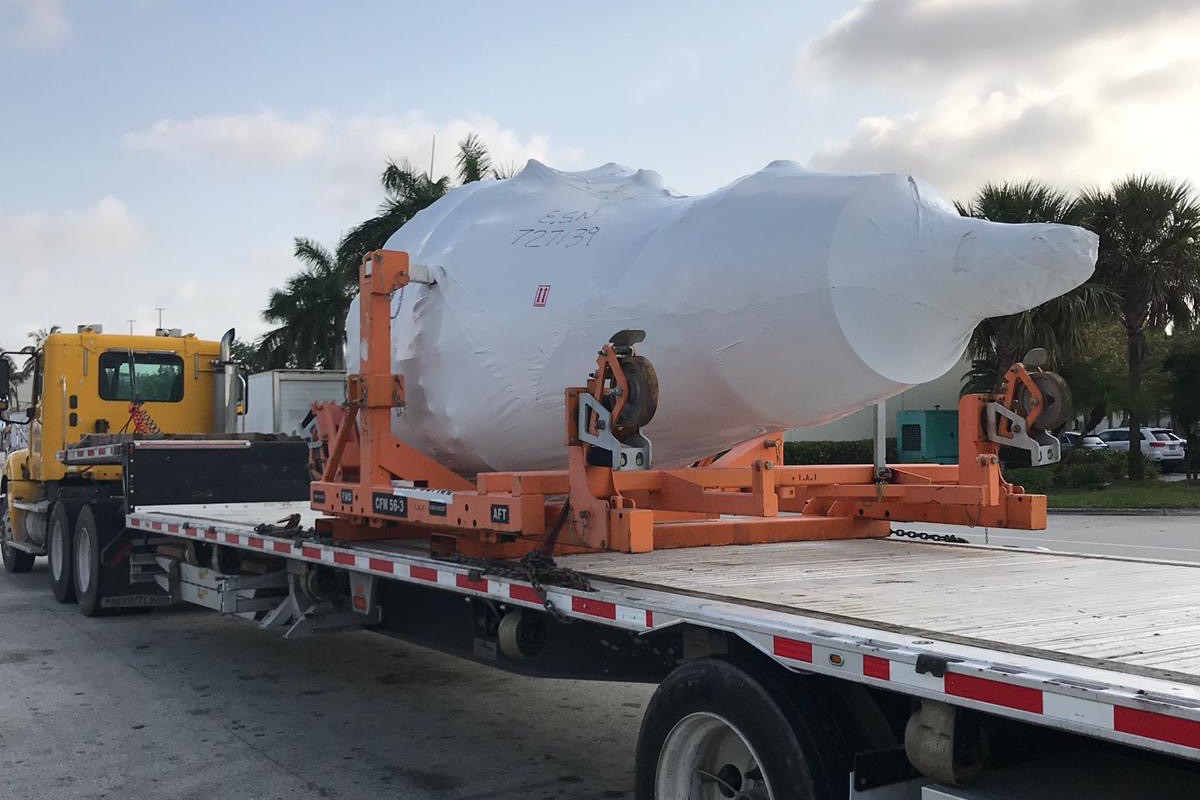
In aviation, three letters change everything. AOG means Aircraft on Ground, and it means the aircraft cannot fly until one specific part arrives. Every hour it sits costs the operator missed missions, stranded crews, disrupted schedules and real money. When an operator declares AOG, the clock does not pause for paperwork, customs or the next available flight.
Between the part and the aircraft sat everything that normally takes days: a booking on an aircraft with capacity, export documentation for a controlled item, ramp access at the departure airport, and a receiving process at the far end. Each one had to succeed on the first attempt. Miss any single step and the shipment slips to the next flight, and the aircraft stays where it is.
Our approach
We treat AOG as its own discipline rather than a hurried version of ordinary freight, because the sequence that works for ordinary freight is exactly what runs out of time here.
We worked our carrier network to find capacity quickly, including outside normal hours and past standard cut-off times. Export documentation was prepared and authorized in parallel rather than afterwards, so compliance never became the bottleneck. Ramp access and special handling were arranged at the departure airport while the booking was still being confirmed.
Destination partners were briefed in advance, so clearance and delivery were ready on arrival rather than beginning on arrival. One team held every thread at once, which meant nothing sat waiting on a handoff between companies.
The outcome
The part made the flight. Work that would ordinarily unfold across several days came together in one coordinated push, with the export handled correctly and the destination ready to receive.
AOG is where a freight forwarder earns its keep. Anyone can move a box when there is time. The value shows when there is none, and it comes from carrier reach, fluency in export compliance, and the willingness to run every step at once instead of one after another.